
Newsroom
In the News
News coverage of the O’Hare Flyer/Great Western Railroad and related stories, all in one place. Each link takes you to the original article.
Metra Announces Draft Plan for O'Hare Service Expansion. Union Station to O'Hare every 30 minutes. See "Regional Rail 1.0" on page 30 of the attached PDF. Become familiar with the plan and prepare to offer public comment! Support Regional Rail 1.0 by declaring it a priority and asking for funding.
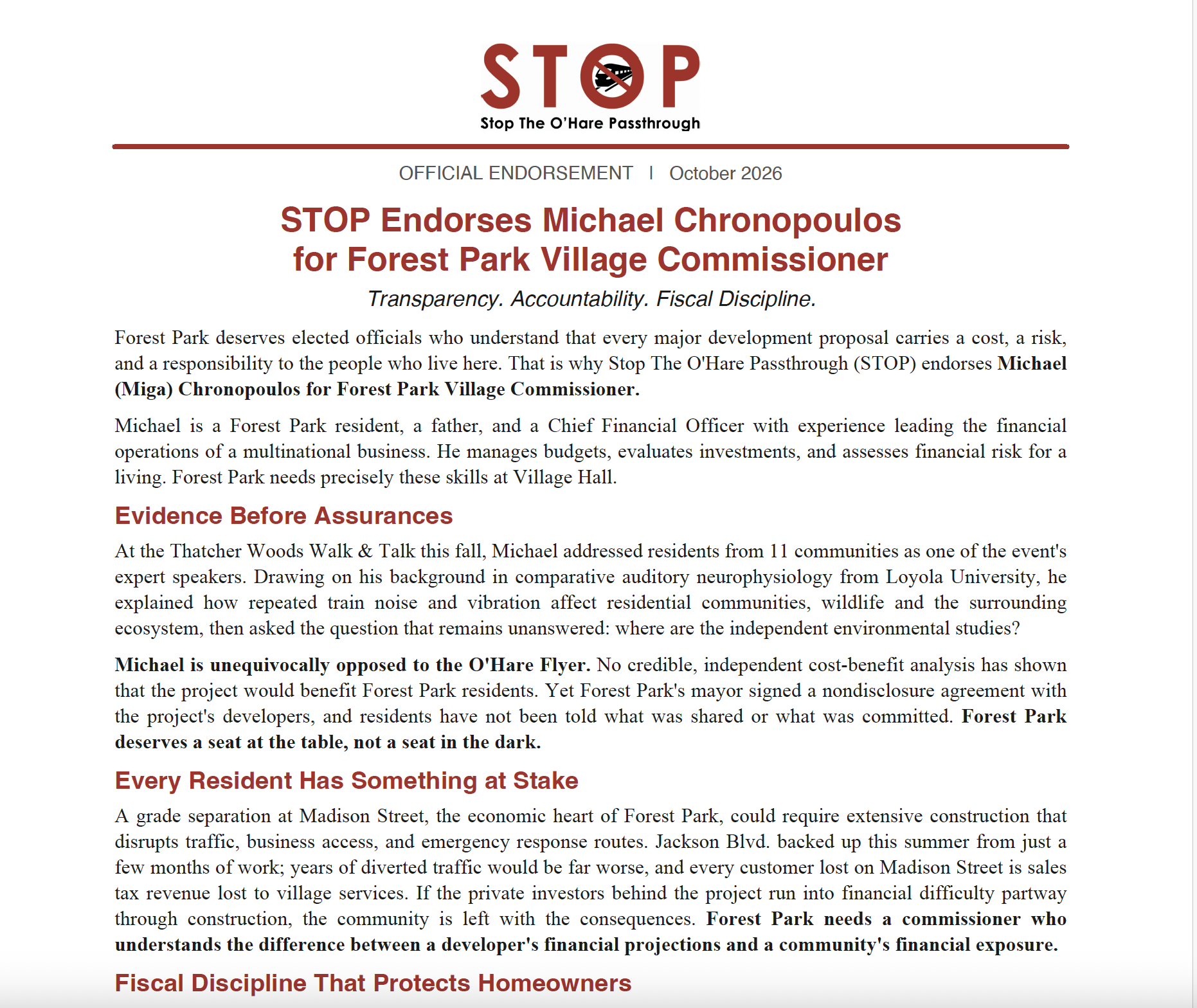
STOP endorses Michael Chronopoulos for Forest Park Village Commissioner
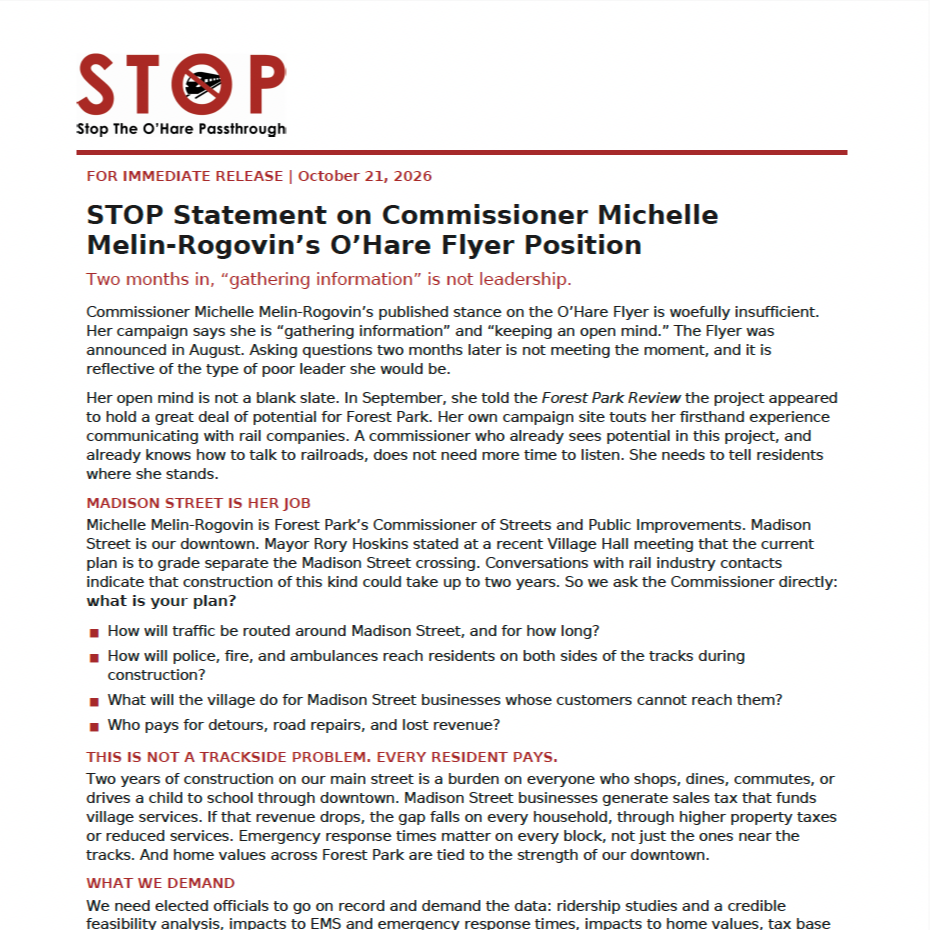
STOP does not endorse Michelle Melin-Rogovin for Mayor of Forest Park.
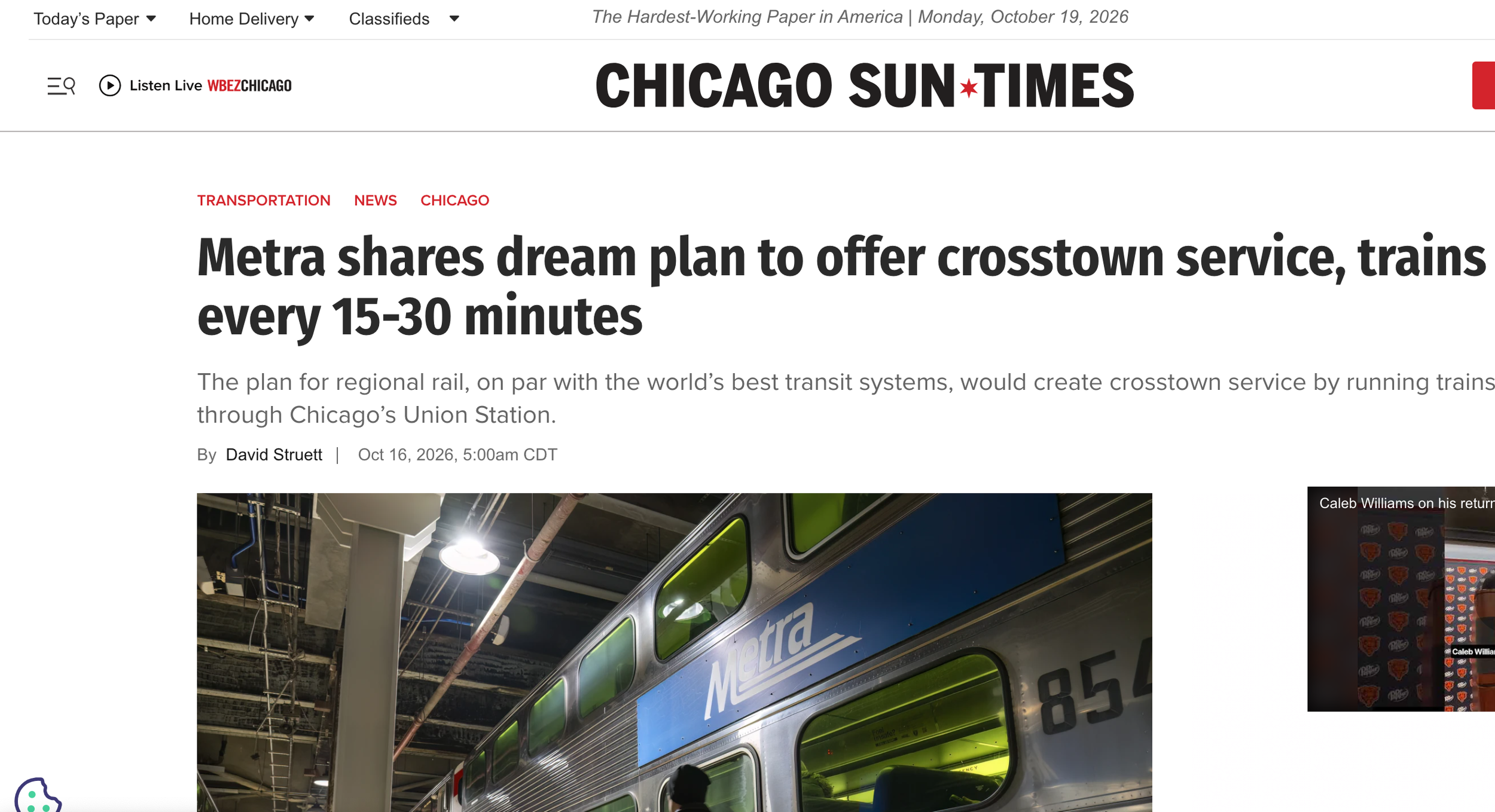
$9 billion. That’s the estimated cost of Metra’s ambitious long-term plan to run trains every 15-30 minutes and, for the first time, connect the south and west suburbs directly to O’Hare Airport. Metra on Wednesday unveiled its draft Systemwide Network Plan to convert its 11 commuter rail lines into all-day frequent “regional rail” on par with the world’s best transit systems.
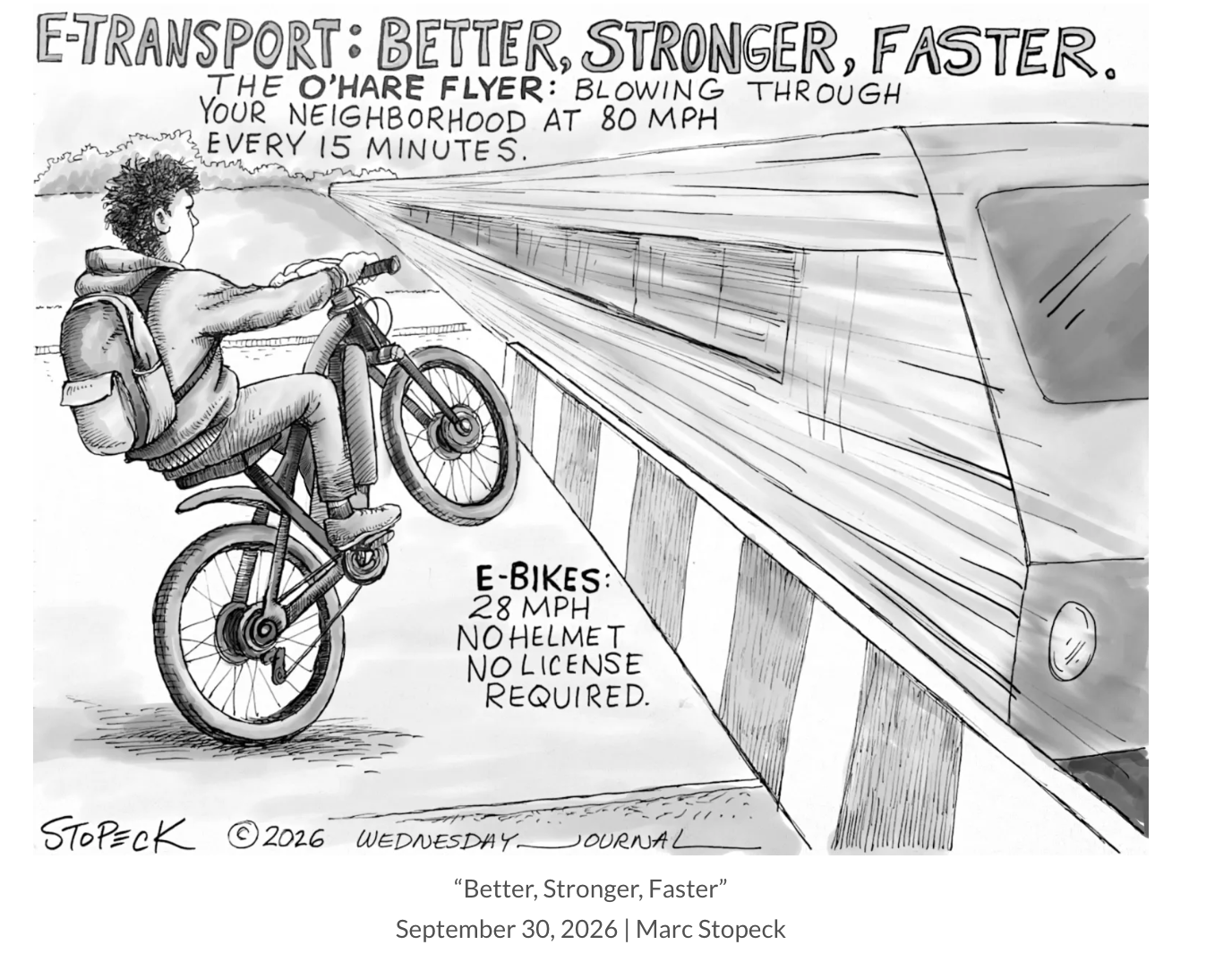
By now, you likely have heard how a developer wants to run a high-speed train that will whip through River Forest, Melrose Park, Forest Park, and 11 other communities on its 80+ mph journey from O’Hare to Downtown Chicago. Dave Lundy, the developer, brags that it will run every 15 minutes from 4 a.m. to 10 p.m. [1] Counting trains in both directions, it’s actually every 7.5 minutes, and 144 times per day. That doesn’t include possible nightly freight trains that could be in play. The developer also claims that the O’Hare Flyer is “whisper quiet,” [2] referencing that the engine is battery electric. While the motor itself may be relatively quiet, significant noise is generated from noise from the wheels and tracks, plus aerodynamic noise, that increase with speed. A battery electric train has an average sound level of 70-78 decibel (dB) [3] vs. 80-85 dB for a diesel freight train. Note a whisper is between 20 and 30 dB [4].
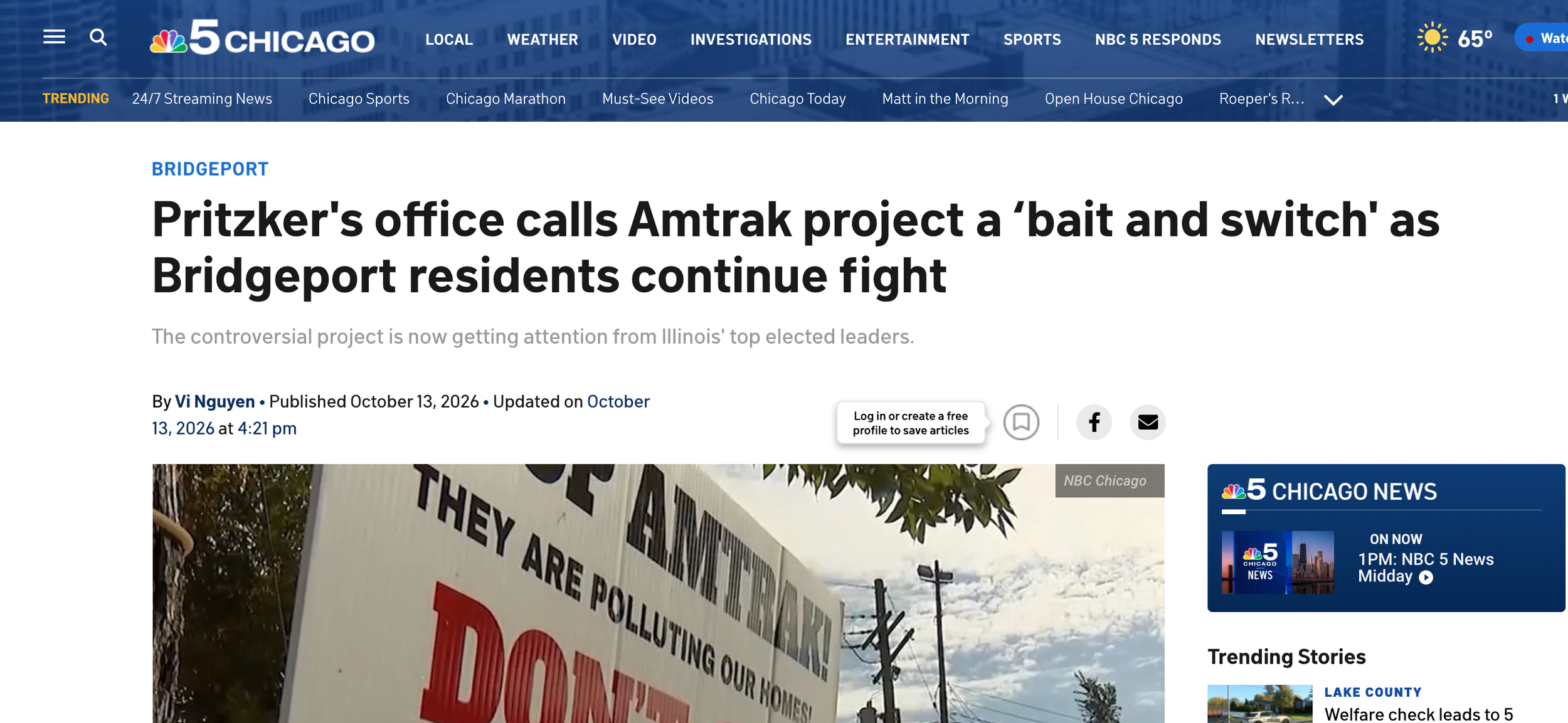
A "bait and switch" is what Gov. JB Pritzker's office is calling Amtrak's proposed plan to relocate its maintenance facility from the South Loop to Bridgeport. The controversial project is now getting attention from the state's top elected leaders. The governor's office said Amtrak has a responsibility to be transparent and to address concerns from residents.
What the unions could be carrying instead The same trades, the same crafts, the same corridor could be supporting projects that exist today: The CTA Blue Line Forest Park branch. Thirteen miles, the first full reconstruction since 1958, more than 84 percent of it under slow zones. Design is funded under a CTA–IDOT agreement signed in July. Construction is a multiyear program of track, structure, signal, and power work, built under the Illinois Prevailing Wage Act by union contractors.7 It needs construction funding, and the body that allocates it, the Northern Illinois Transit Authority (NITA), created by this year’s transit law, is deciding its capital program now.8 The Metra O’Hare program. A flyover at the A-2 junction, estimated at more than a billion dollars; new capacity from A-5 to B-12; a federally funded study of frequent service already underway; battery-electric trains already ordered.9 This is the same Canadian National corridor the Flyer wants, built as public infrastructure instead of leased to a private operator.
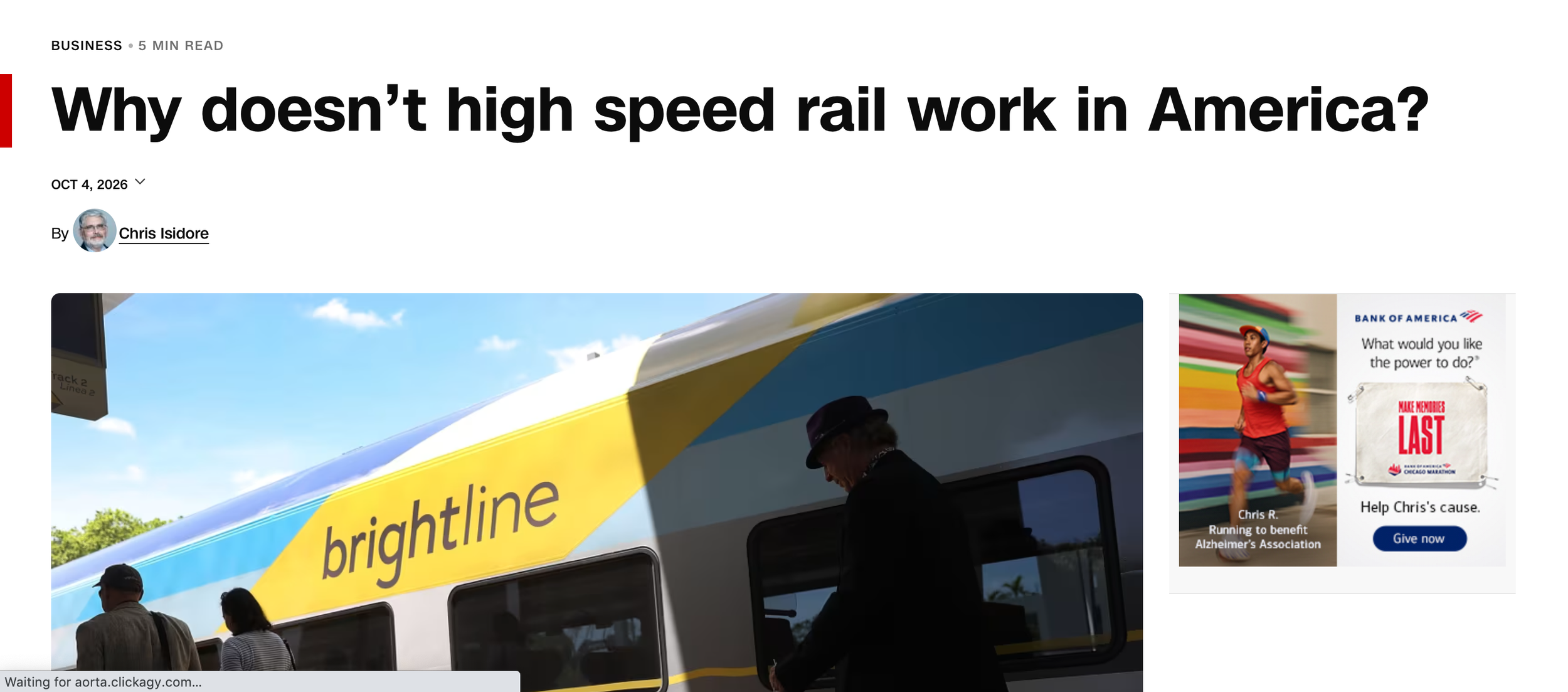
American railroads were once the envy of the world and the engine of its industrial age. But that hasn’t been the case for more than half a century. Brightline, founded in 2012, wanted to change all that. Then it filed for bankruptcy last month after not making enough money to cover its debts.
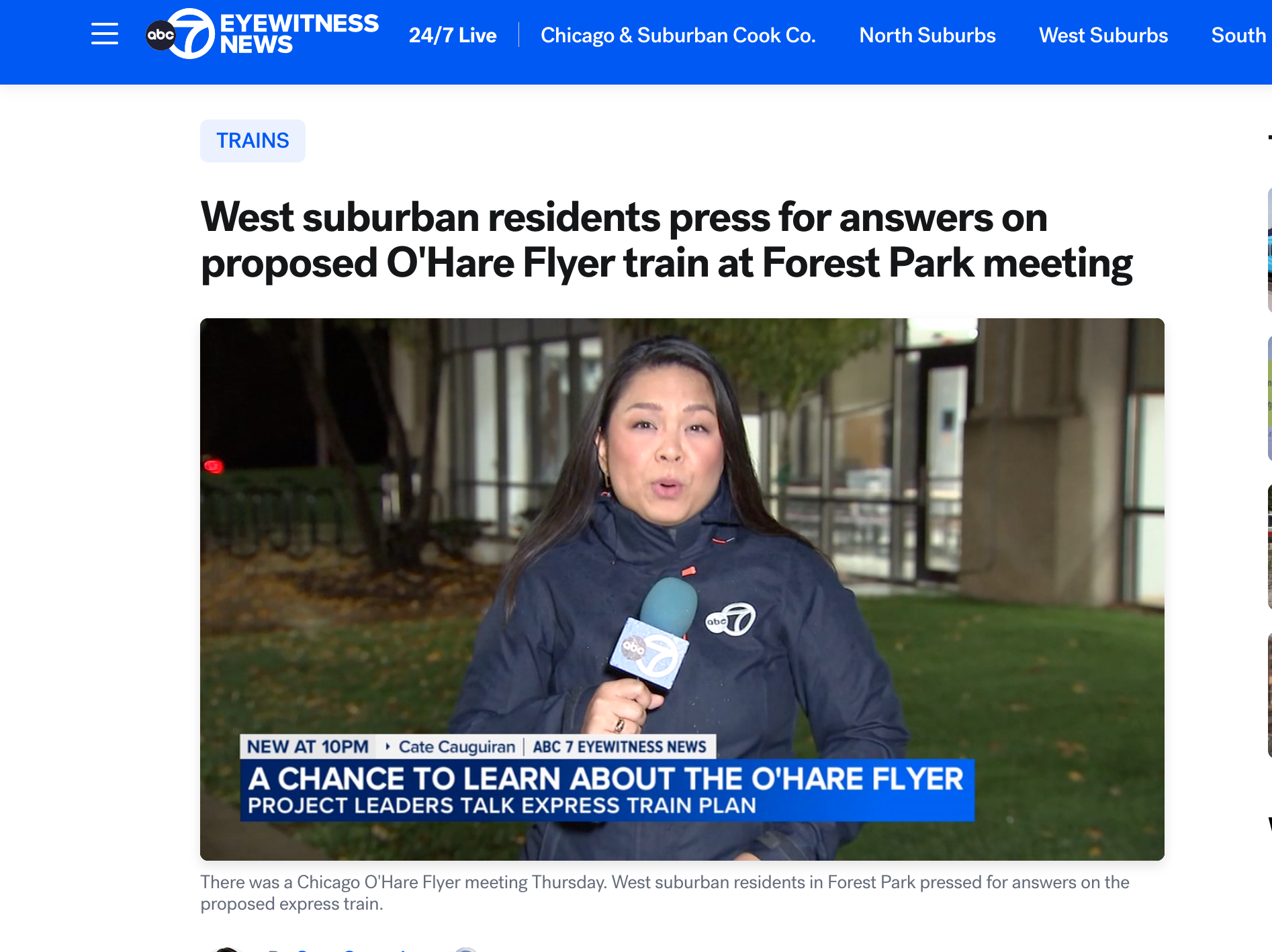
Residents heard directly from the team behind the proposed O'Hare Flyer, a privately funded express rail connection between downtown Chicago and O'Hare International Airport. Forest Park Commissioner Maria Maxham said key questions remain unanswered, including studies on traffic, economic impacts and property values. "I don't think aspirational stories or anecdotes are enough to prove that this is a project that we should pursue," Maxham said.

I am a kid who lives in River Forest. I’ve lived here my whole life and really care about what happens in my community. I like taking the el and going into the city on adventures. I understand that trains of all kinds can help move people around and they are good for many reasons. But the O’Hare Flyer is not the right choice for my community. Let me tell you why.
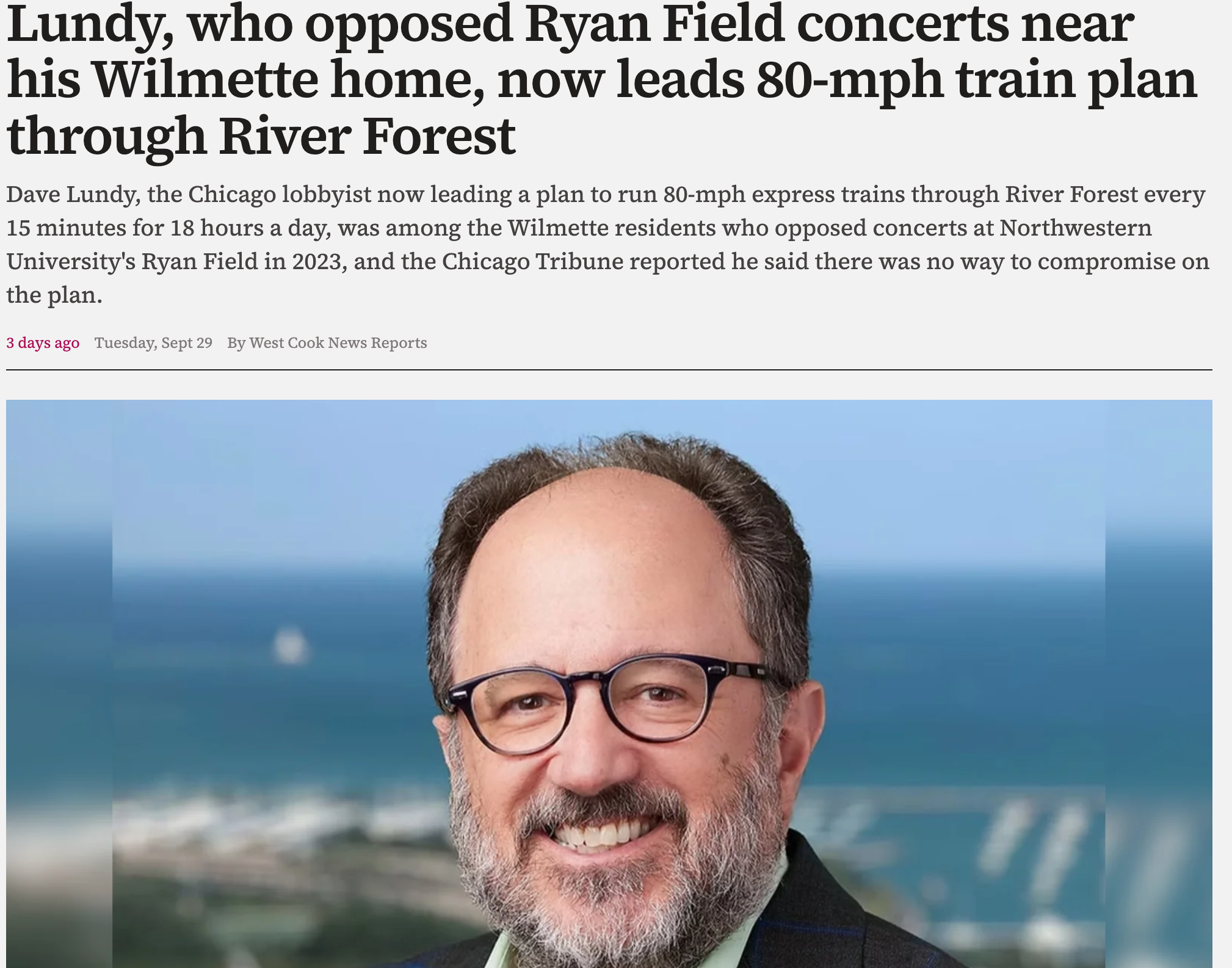
Dave Lundy, the Chicago lobbyist now leading a plan to run 80-mph express trains through River Forest every 15 minutes for 18 hours a day, was among the Wilmette residents who opposed concerts at Northwestern University's Ryan Field in 2023, and the Chicago Tribune reported he said there was no way to compromise on the plan.
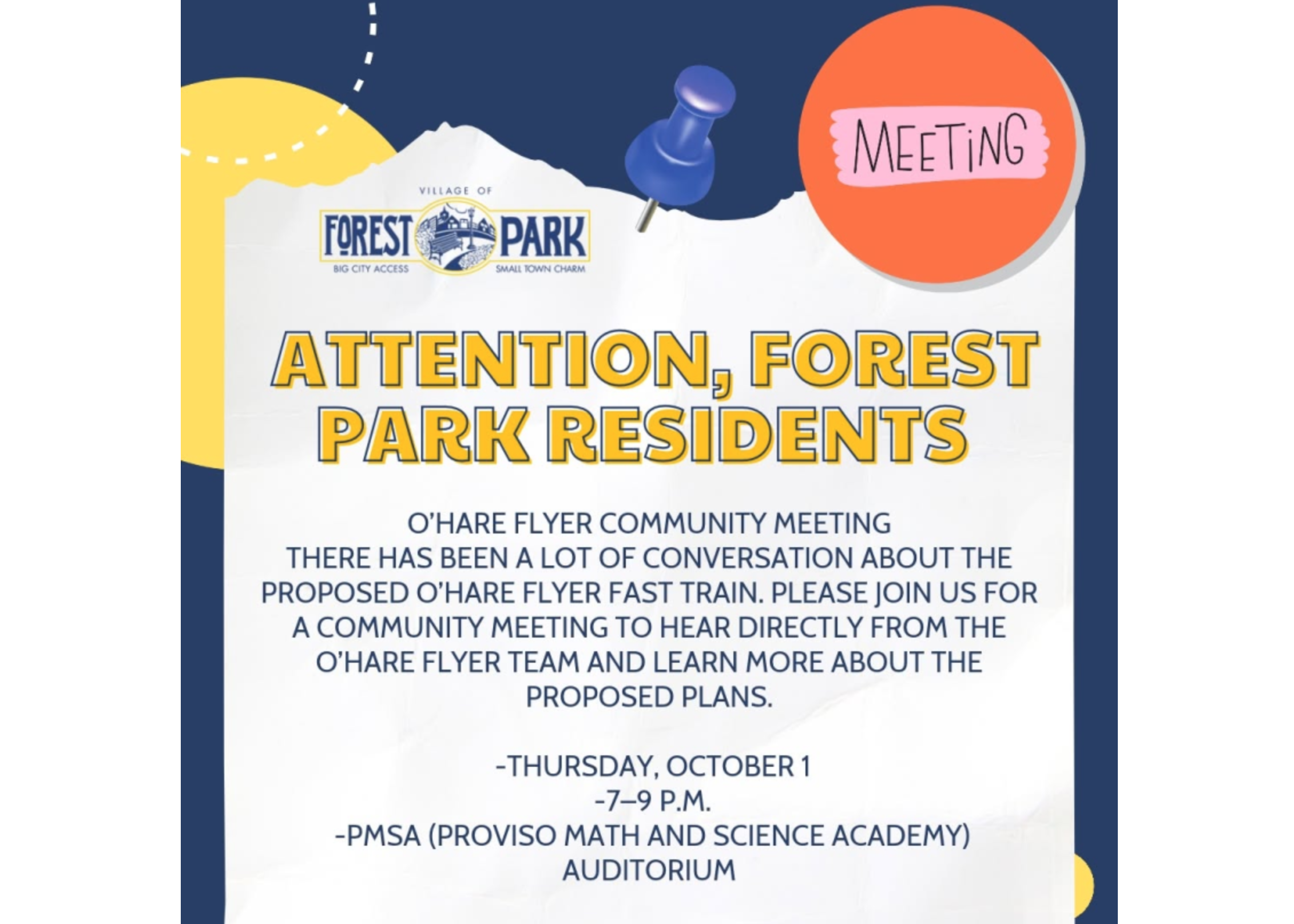
The Village of Forest Park is hosting a community meeting with the O’Hare Flyer team on Thursday, October 1. It is the first time the company has agreed to take questions from residents of a town on the line. Here is the meeting information, and five questions worth asking.
The only privately financed passenger railroad built in the United States in a century went to bankruptcy court on Friday. The O’Hare Flyer’s CEO says his project is “radically different” from the Brightline, and he is right. But not in the way he meant. And it’s not good.
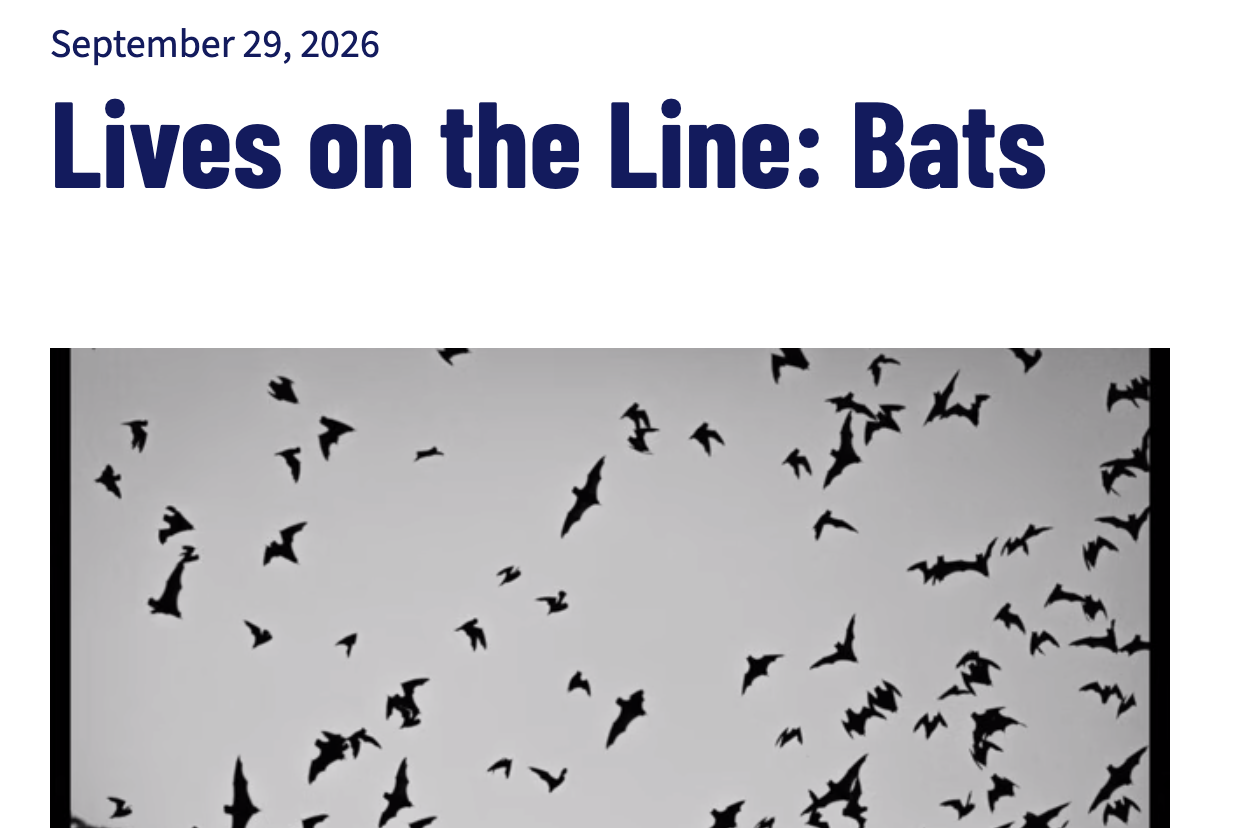
Thatcher Woods is home to eight species of bats. The operation of the O’Hare Flyer within the Forest Preserve would devistatingly impact all bats, including the endangered Northern Long-Eared Bat.
Lives on the Line offers a video with information and perspectives about a proposed Forest Park Stop for the O’Hare Flyer.

Lives on the Line devles into the devistating impact the O’Hare Flyer would have on the Thatcher Woods ecosystem.
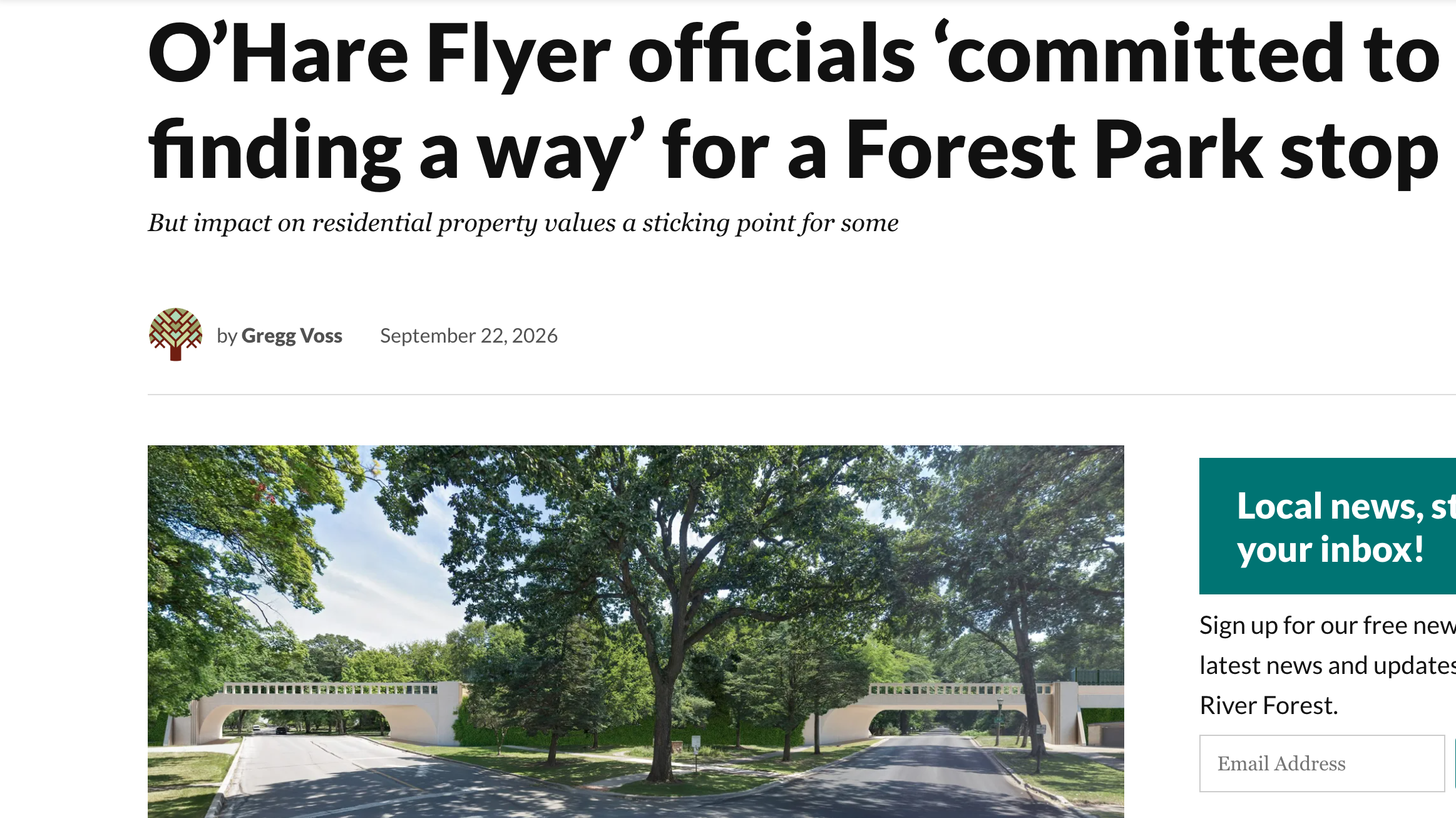
O’Hare Flyer officials ‘committed to finding a way’ for a Forest Park stop but impact on residents is a sticking point for some
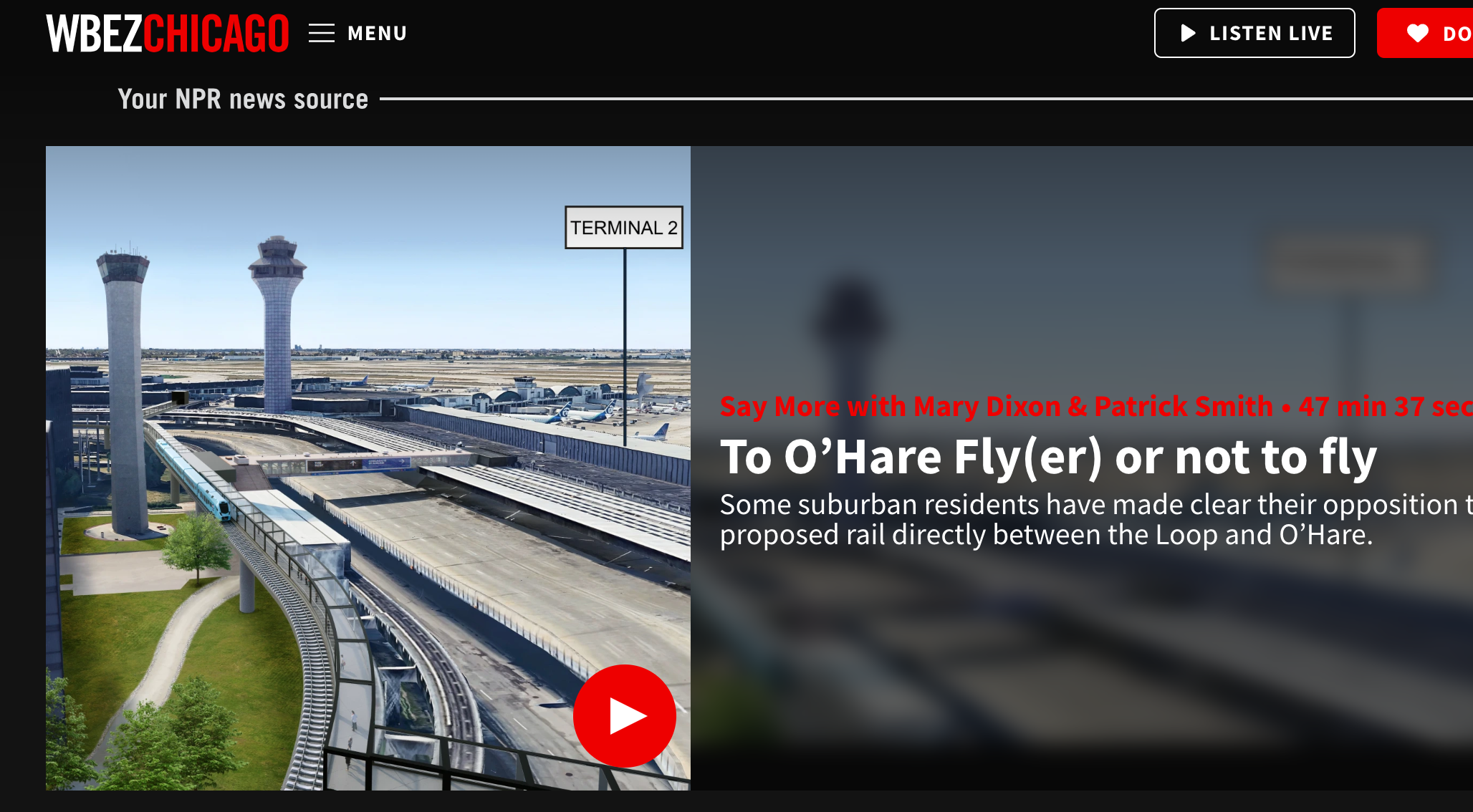
Less than a month after the reveal of a new plan to build a high-speed train directly connecting downtown Chicago with O’Hare International Airport, some suburban residents have organized to stop the proposed project from going through their town. The Village Board of River Forest even unanimously passed a resolution this week demanding the people behind the O’Hare Flyer find a new route.
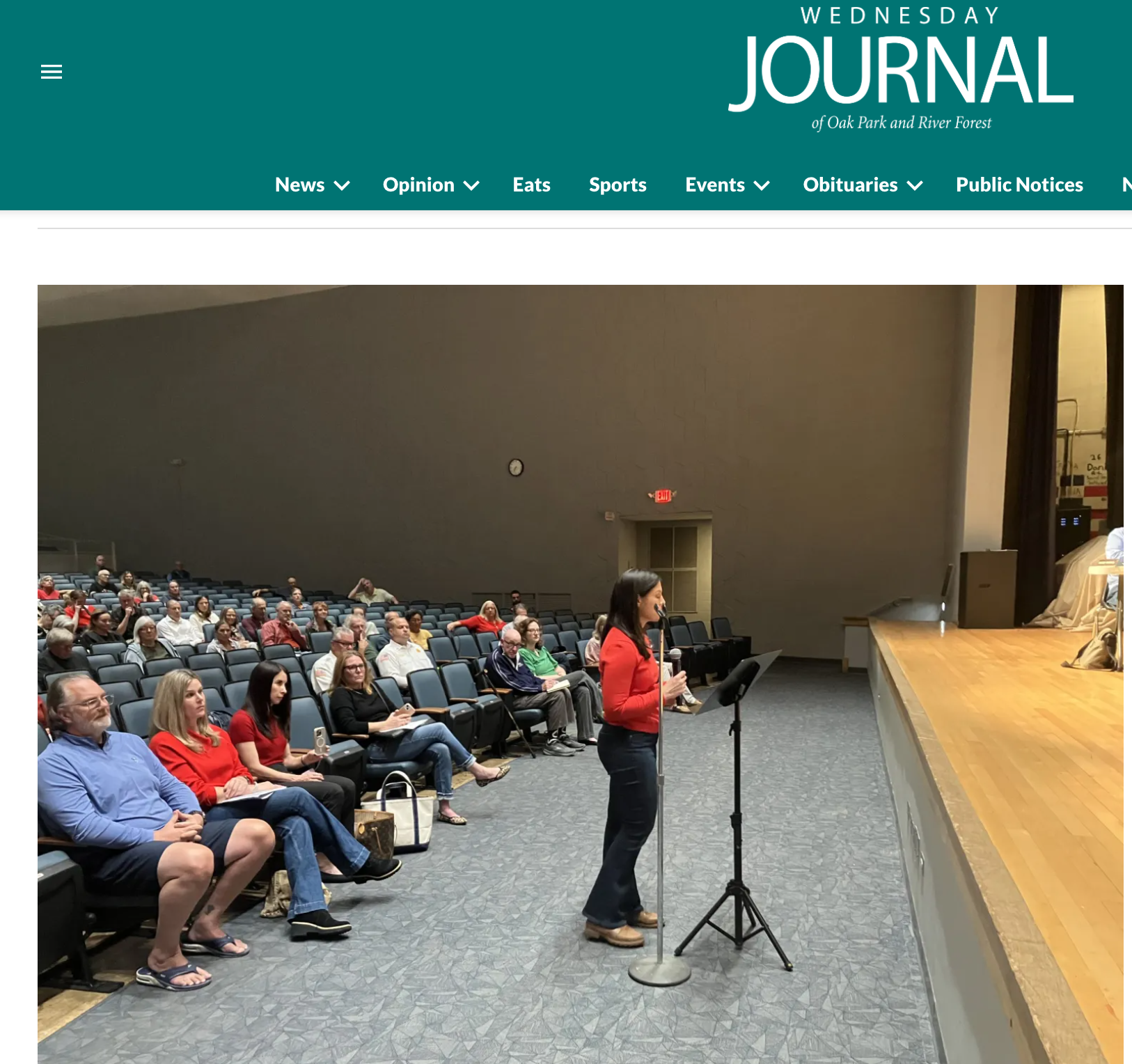
Monday night the River Forest Village Board unanimously passed a resolution opposing the proposed O’Hare Flyer high speed private rail service between downtown Chicago and O’Hare Airport that would run through River Forest with trains passing every 15 minutes between 4 a.m. and 10 p.m.

Eric Zorn passed his readers’ follow-up questions to O’Hare Flyer CEO Dave Lundy and published the answers this week.1 There are some new questions raised, and some more inconsistencies from Mr. Lundy.
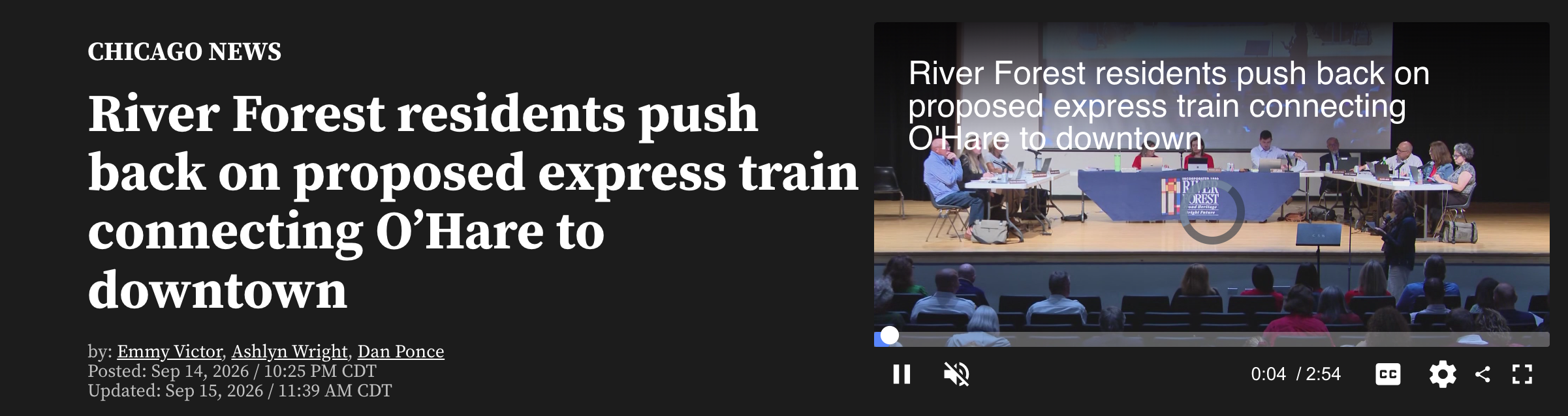
More than 150 people attended Monday night’s board meeting at Trinity High School. While the proposed train would run through several communities, residents who live along the railroad tracks in River Forest seem particularly unhappy about the project.
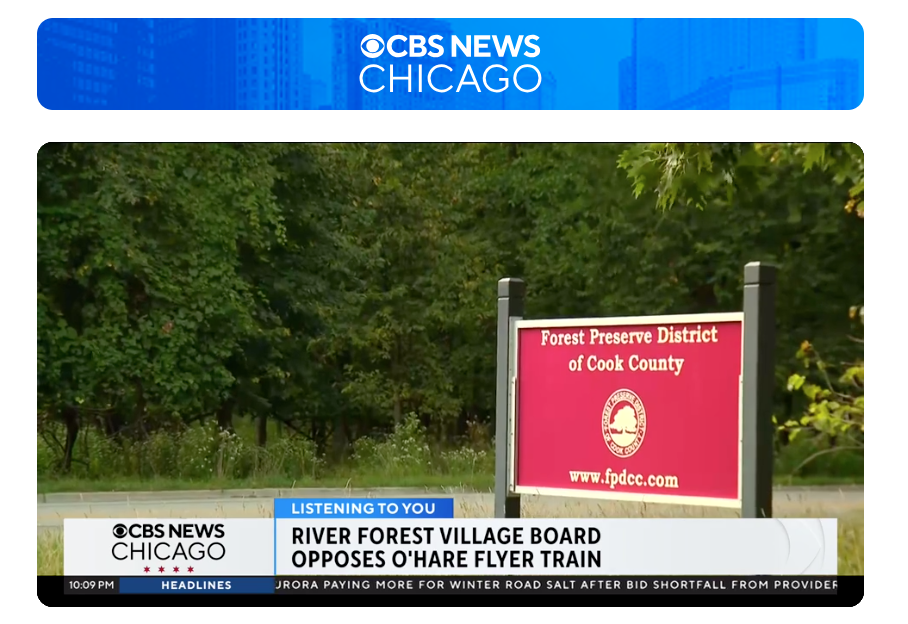
The River Forest village board voted unanimously to pass a resolution to oppose the O'Hare Flyer during a meeting Monday night. Dozens of residents filled the auditorium of Trinity High School at 7574 Division St., with many of them encouraging the village board to vote "no" on the O'Hare Flyer.
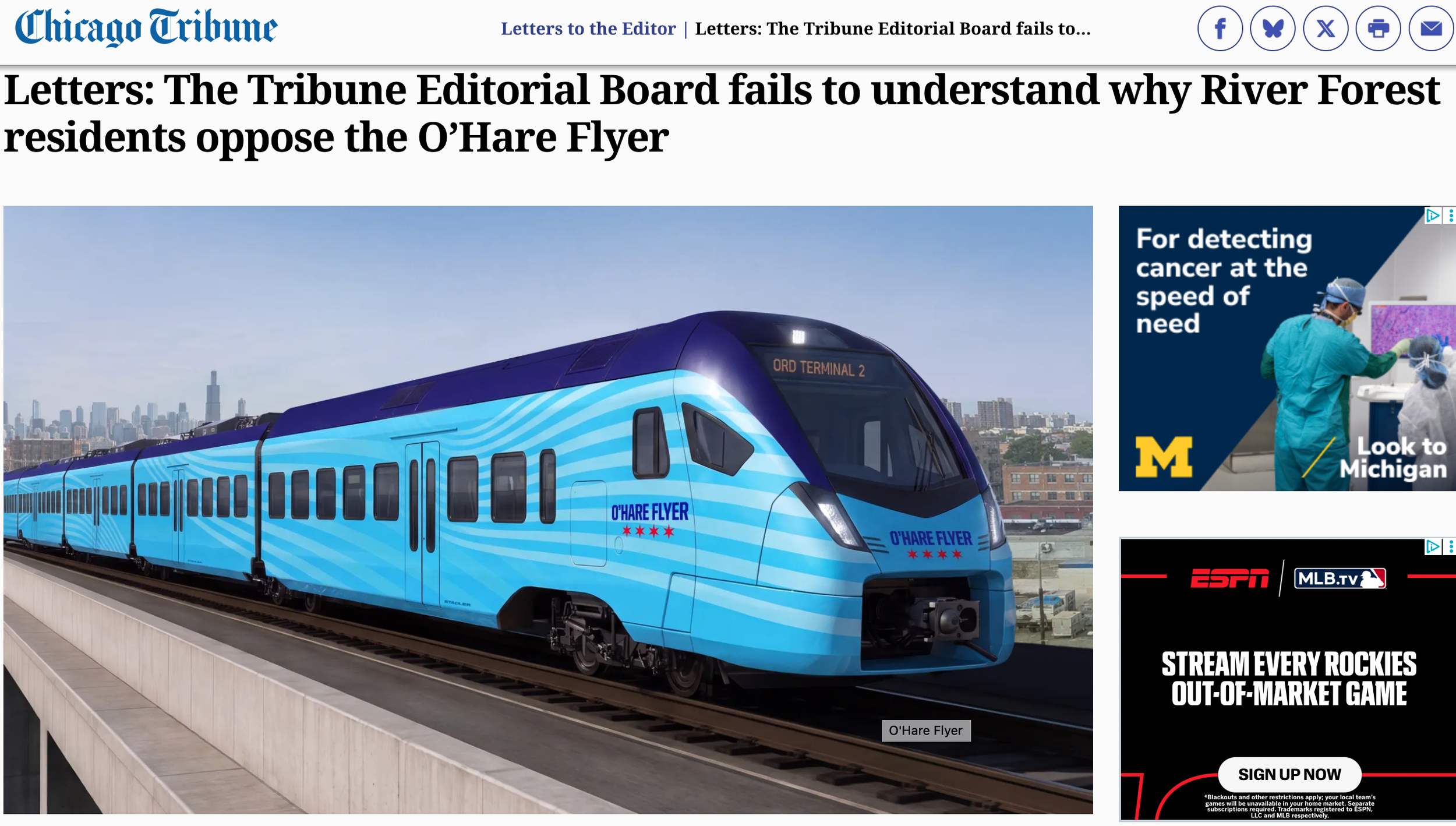
What benefit to the western suburbs would this really provide? What is the purpose of disrupting life in a quiet residential neighborhood a short distance from the forest preserves when there are clearly other alternate routes such as the Blue Line and Metra already serving O’Hare International Airport?
A new proposal for a privately funded and operated express train delivering passengers from O’Hare to downtown in 15 minutes has generated plenty of buzz — as well as questions about the obstacles ahead.
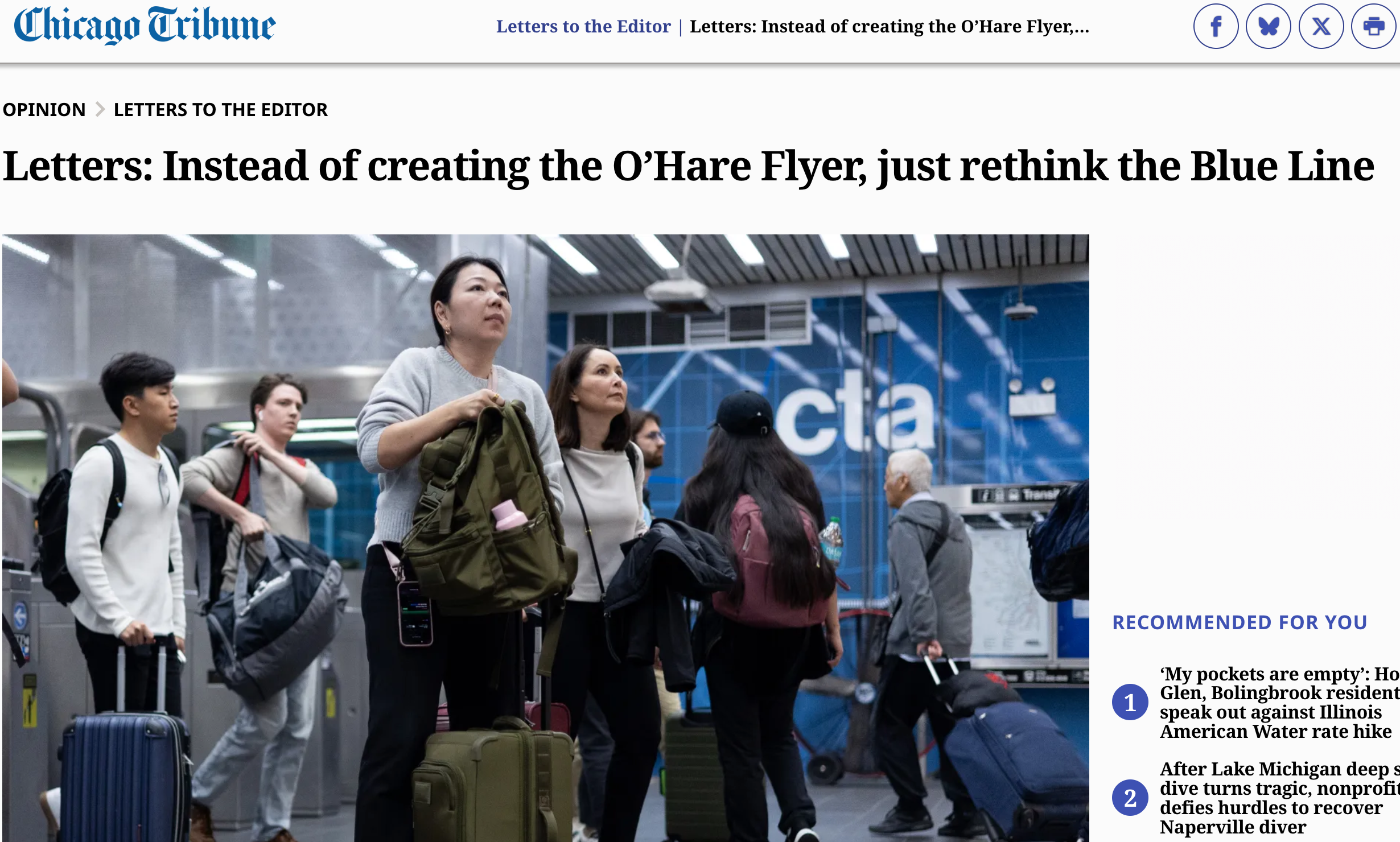
Chicago Tribune Letters to Rethink the Blue Line instead of creating the O'Hare Flyer.
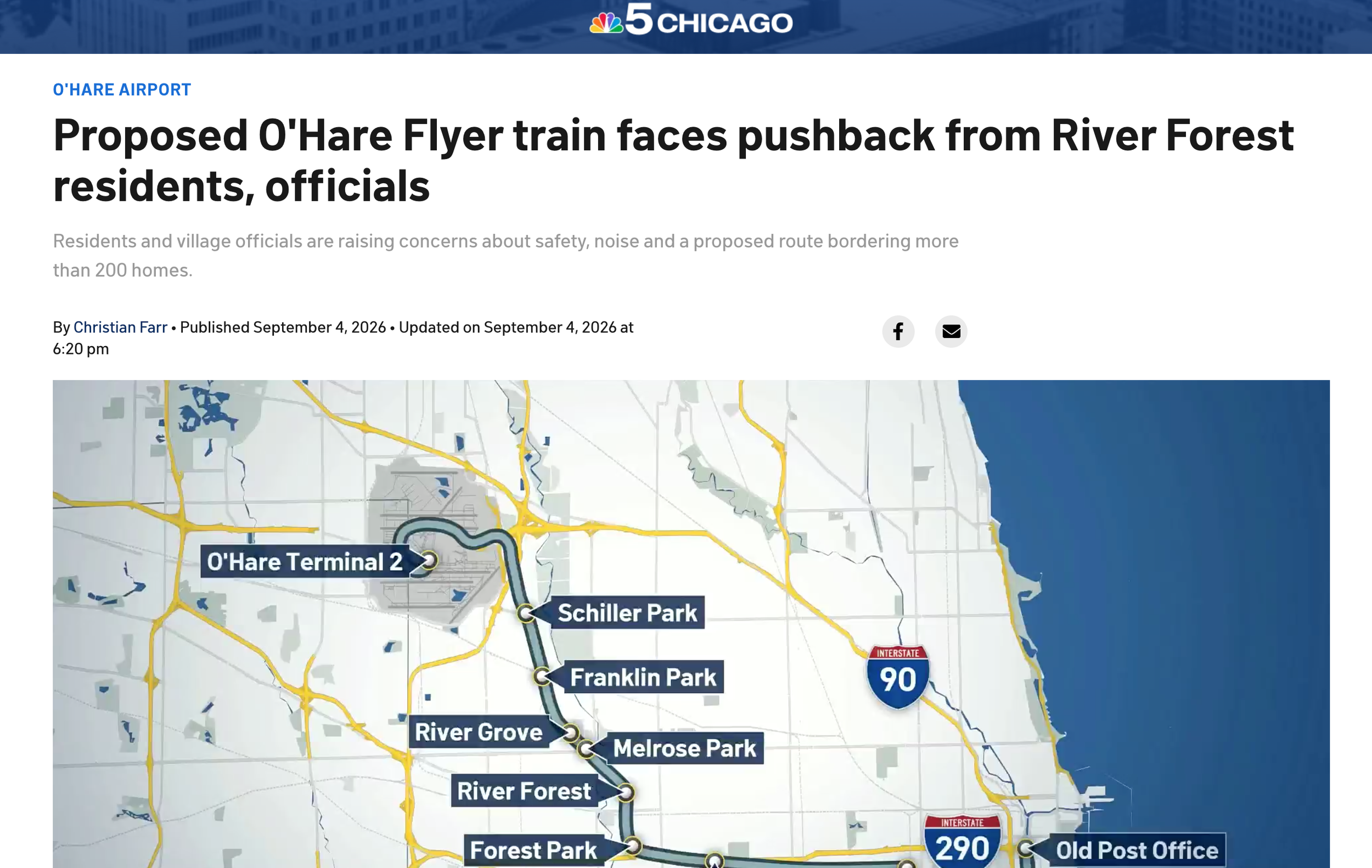
“A high-speed train coming through could be really dangerous for residents in town,” Walsh said, also citing “the quality of life concerns of having trains going by every 15 minutes right in backyards for over 200 homes that immediately border the tracks.”
The Northern Illinois Transit Authority’s board meets for the first time Thursday, officially launching the agency tasked with transforming Chicago-area public transit.
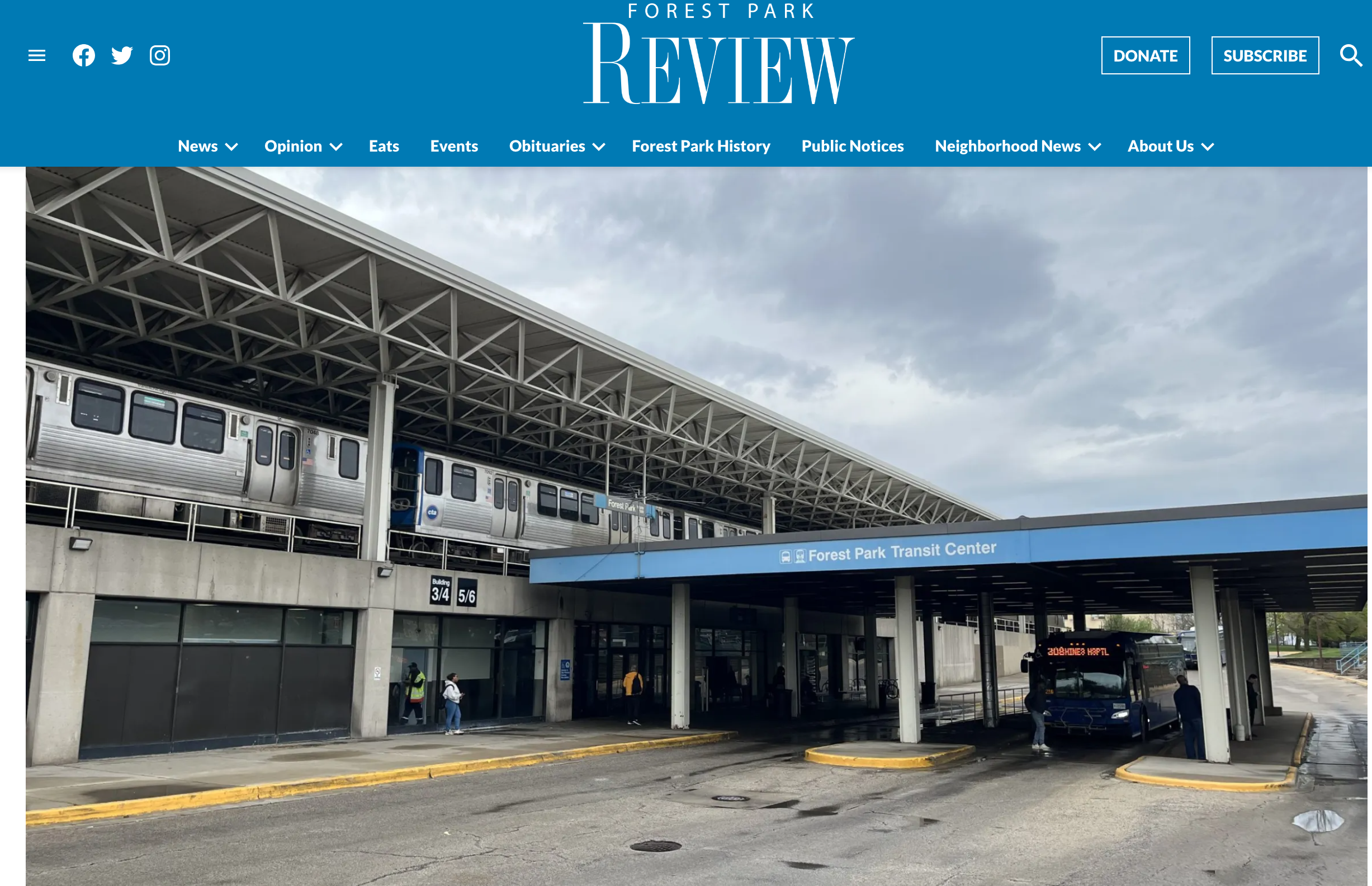
Forest Park Review: CTA, IDOT sign off on design prep for long-awaited Blue Line improvements. The Chicago Transit Board, the governing board for the CTA, has unanimously approved two intergovernmental agreements that have implications for the West Side and western suburbs.
WBEZ: How would a fast-rail train to O’Hare actually work? The O’Hare Flyer, a proposed rail connection from the Loop to the airport, is the next big idea stirring both excitement and apprehension.
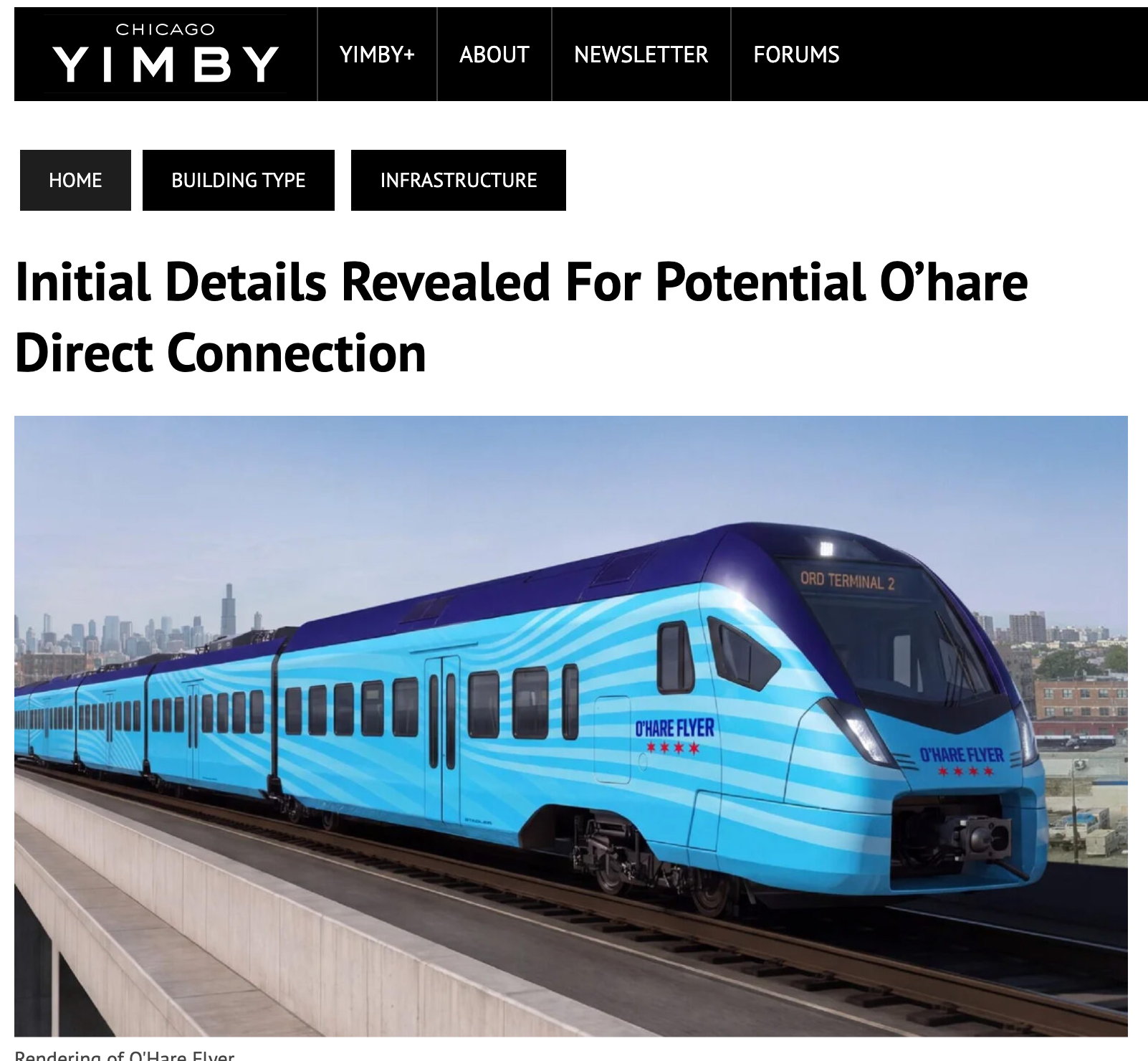
The project will now need to finalize deals with the last two freight lines and the city, followed by approval from federal departments as well. This will require another two to three years of planning before moving forward, including final fundraising to cover the cost.

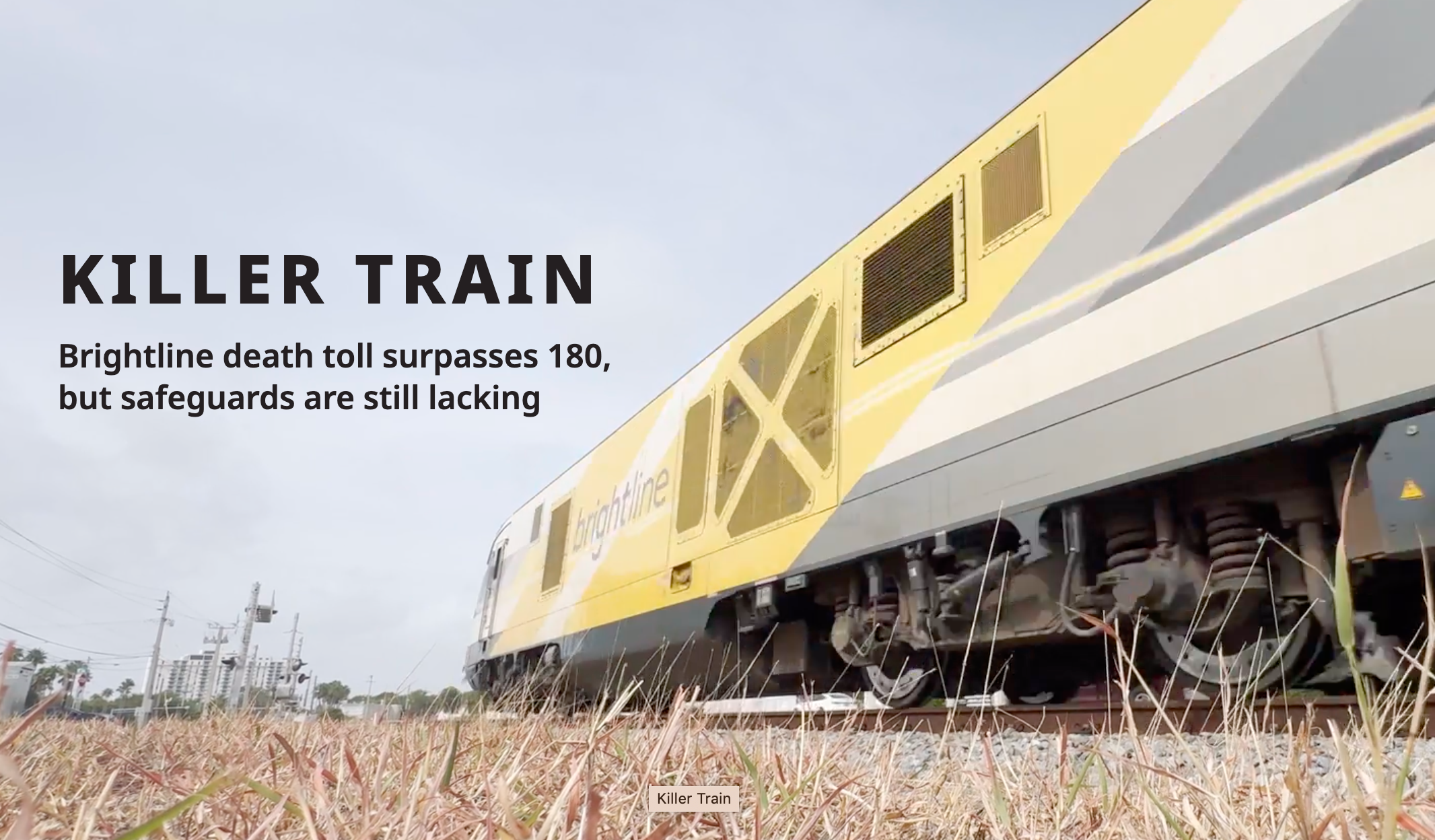
Meldon Law: Brightline is Most Dangerous Train in the Country. As of May 2026, the total number of lives lost has surpassed 200.
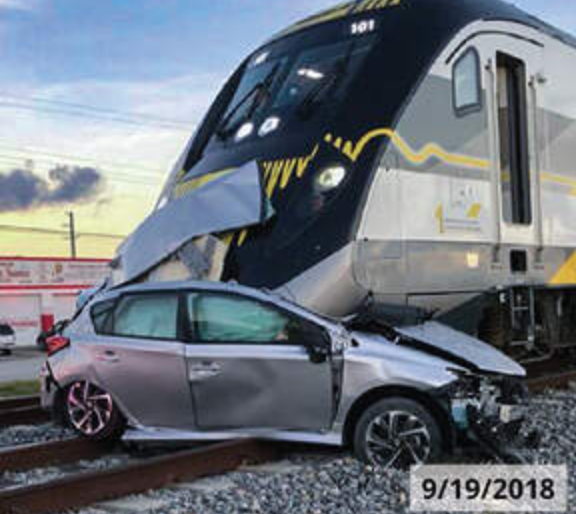
Brightline is the nation’s most dangerous passenger train, reporters found, killing someone every 13 days of service, on average. The reporting team found that Brightline has failed to urgently address the train’s dangers, blamed victims for the high death rate, and, as fatalities climbed, turned to the public to pay for safety upgrades.